Bromeliaceae
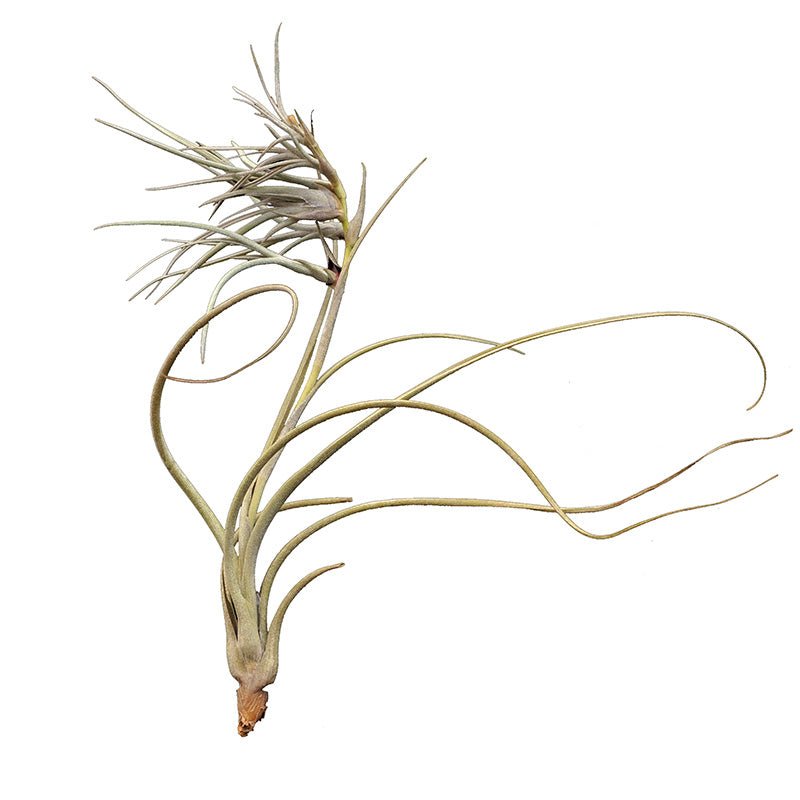
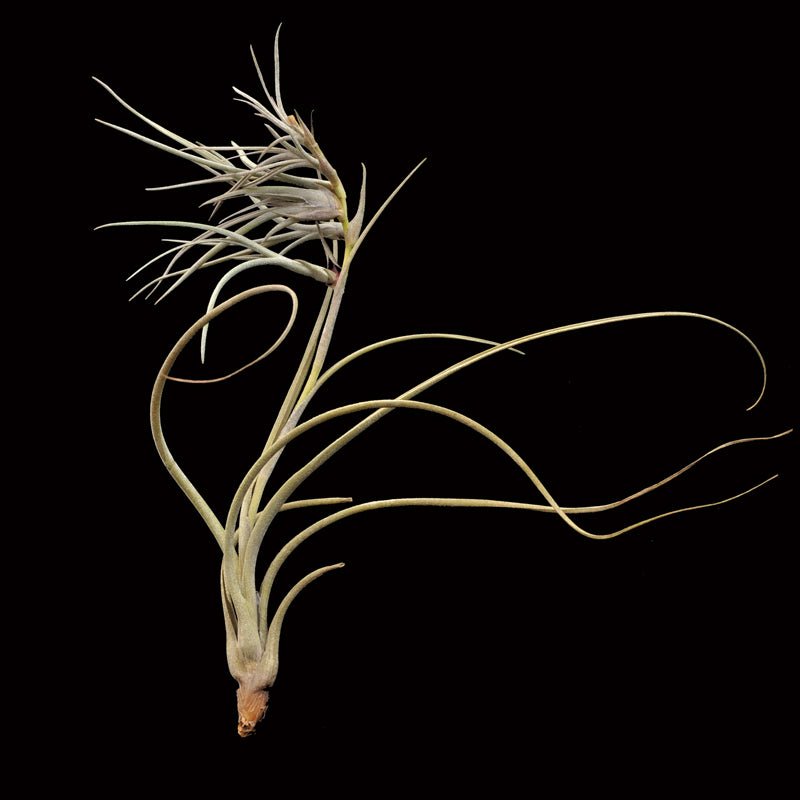
Tillandsia baileyi 'Halley's Comet'
Tillandsia baileyi 'Halley's Comet'
Couldn't load pickup availability
Share
Discover Tillandsia baileyi 'Halley's Comet', a unique pseudoviviparous* form of the Lone Star airplant:
- Distinctive trait: Pseudoviviparous* growth habit
- Impressive development: Forms large, celestial-like clumps over time
- Unique propagation: Produces offsets from the inflorescence
Key features:
- Celestial appearance: Clumping habit resembles a comet's tail
- Continuous growth: Offsets emerge from both base and bloom spikes
- Low-maintenance: Self-propagating nature reduces need for manual division
Scientific note: Pseudovivipary* in Tillandsia:
- Allows for rapid colonization of favorable habitats
- Provides young plants with nutrients from the mother plant
- Increases survival rate of offspring in challenging environments
Care tip: Allow offsets to remain attached until they're at least 1/3 the size of the mother plant for best results
Ideal for: Collectors seeking unique growth habits, those who enjoy watching plants evolve over time, and fans of self-propagating species.
Transform your airplant display into a living cosmos with Tillandsia baileyi 'Halley's Comet'. Watch as it creates its own celestial system of offsets.
*Why "pseudoviviparous"? In botany, true vivipary means seeds or embryos begin to germinate and grow before they detach from the parent plant or fruit. Air plants like this one do something different: they produce baby plantlets (pups) directly along the flower spike, rather than only at the base of the mother plant. That is pseudovivipary, even though you will often hear it called "viviparous" in the air plant world.